Picky Kitchen
Why do nylon kitchen utensils melt so easily? The question sounds simple, but the answer involves heat, pressure, time, and material design. Nylon tools may soften, bend, discolor, or develop a rough surface before they appear to melt. The word “melt” can mislead us. That distinction matters.
Materials scientist Dr. Mark Miodownik wrote, “Materials are the stuff of life.” His insight applies directly to kitchen tools. Nylon is a useful polymer, not an unlimited heat shield. Its performance depends on the nylon grade, reinforcement, manufacturing quality, and exposure temperature. A thin nylon turner resting against a hot skillet can soften quickly. Direct contact with a burner or pan edge creates an even harsher hotspot. Dishwashers can add repeated heat, detergent exposure, and mechanical stress.
The main reason why do nylon kitchen utensils melt so easily is that many products operate close to their practical heat limit. Cooking temperatures can exceed the range intended for ordinary nylon utensils. Extended contact is often more damaging than a brief touch. A spoon may look acceptable after one mistake, then warp during the next meal. Small cracks can trap food residue. I once assumed discoloration was merely cosmetic; that assumption needs reconsideration. A damaged tool is harder to clean and less dependable.
Check the manufacturer’s temperature rating before use. Avoid leaving nylon utensils inside hot cookware. Replace tools that blister, deform, smell unusual, or show deep scratches. Silicone, stainless steel, or high-heat polymer alternatives may suit demanding cooking tasks better. Reliable decisions begin with the material, not just the label.
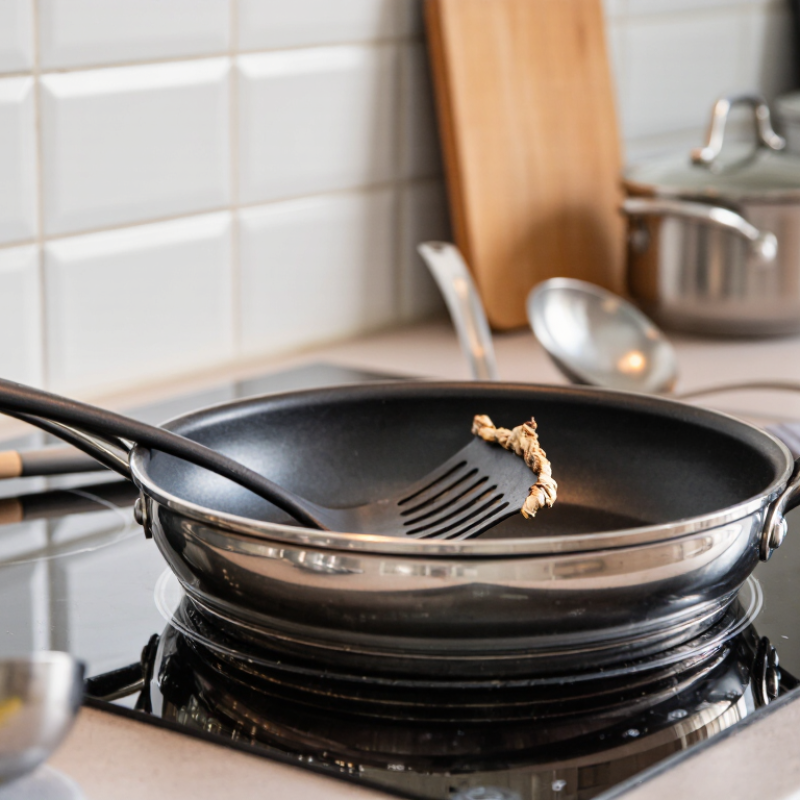
Nylon is a synthetic thermoplastic, not a metal or ceramic material. It is made from long polymer chains that become softer as temperature rises. Many kitchen utensils use nylon because it is lightweight, flexible, and gentle on cookware. However, its heat resistance has practical limits. Typical nylon may soften near 160–200°C, while melting points often range from about 210–260°C, depending on its formulation.
A pan can exceed these temperatures quickly, especially when empty. The utensil’s edge may touch a hot surface for only a few seconds. That small contact area concentrates heat and can leave a glossy mark, bend, or melted tip. Direct contact with a burner is even harsher. Heat wins. Dishwashers can also age nylon through repeated heat cycles, although damage may appear slowly.
I once assumed a utensil was safe because it looked unchanged after cooking. That judgment was incomplete. Nylon may weaken internally before visible melting appears. Color changes, rough edges, soft spots, or a plastic smell deserve attention. Different nylon grades also behave differently, and reinforced versions are not automatically heat-proof. Checking the manufacturer’s temperature guidance remains the most reliable practice. In daily use, I keep nylon tools away from hot pans and never rest them across a heated rim. This habit is simple, but I still forget occasionally.
Nylon kitchen utensils can soften long before they visibly melt. At the molecular level, heat increases movement between nylon’s polymer chains. Hydrogen bonds become less effective, and the chains slide past one another. The firm spatula then bends, twists, or leaves a shiny mark on a hot pan. Nylon 6/6 commonly melts near 255–265°C, while nylon 6 melts around 220–225°C, according to engineering data compiled by UL Prospector and MatWeb. However, cookware surfaces can exceed 300°C when heated empty. That gap explains the sudden damage.
A professional detail is easy to miss: softening depends on time, load, and moisture. Nylon absorbs water from the air, which can lower stiffness and change its heat response. ISO 75 heat-deflection testing also shows that performance varies by grade and reinforcement. In practical use, a thin turner pressed against a pan edge may deform faster than a thicker utensil. I once thought a brief touch was harmless; the warped edge suggested otherwise. Material labels are not always clear enough.
Tips: Keep nylon tools below about 180°C whenever possible. Do not leave them resting on cookware. Use a wooden or heat-rated metal tool for searing. Inspect the surface for gloss, bends, or rough patches. Replace damaged utensils, even when the shape seems usable. Temperature claims should be treated cautiously because testing conditions differ.
How Heat Softens Nylon Kitchen Utensils at the Molecular Level
Nylon begins to lose rigidity near its glass-transition temperature because polymer chains gain molecular mobility. As temperature rises, the material becomes softer and more flexible. Near its melting temperature, crystalline regions break down and the utensil can deform or melt. Typical values vary with nylon type, moisture content, fillers, and processing conditions.
Approximate thermal-transition ranges for unfilled nylon 6 and nylon 6,6.
Nylon kitchen utensils can melt quickly when they touch hot cookware because heat transfers directly into a small contact area. A pan surface may become much hotter than boiling water, especially when it is empty or heated over a strong flame. Nylon softens when its temperature approaches its heat-resistance limit. It may bend first, then become glossy, sticky, or visibly deformed.
The thin edge of a spatula is especially vulnerable. Direct contact concentrates heat at that edge, while the handle remains relatively cool. Moving the utensil does not always prevent damage. A few seconds against a hot pan can be enough. Scraping the base of cookware also creates pressure, forcing the softened nylon against the surface. Small melted particles may transfer into food, although the amount depends on the utensil’s material and condition.
I once assumed a nylon turner was safe because it survived boiling soup. That assumption was wrong. Boiling liquid limits the temperature near 100°C, but dry cookware can become far hotter. Check the utensil’s stated heat rating before cooking. Avoid leaving it inside a hot pan, even briefly. Look for warping, rough edges, discoloration, or a plastic smell. Replace damaged tools promptly. Heat ratings can vary between products, and household cooking conditions are not perfectly controlled.
Nylon kitchen utensils do not melt only because a pan is “too hot.” Cooking method matters more than many users expect. The FDA Food Code 2022 requires hot food to remain at least 57°C, yet an empty frying pan can quickly exceed 200°C. Direct contact with a pan base, grill plate, or exposed heating element creates a concentrated heat zone. Stirring oil in a dry, preheated pan is especially harsh. The handle may feel cool while the edge softens.
Common nylon 6/6 has a melting point near 255°C, according to materials data referenced by ASM International. That figure can mislead. Softening and warping begin well below the melting point, especially after repeated heating. Thin edges, narrow heads, and dark surfaces absorb heat faster. A long shaft may also conduct heat toward the grip. Design is not cosmetic here. It controls exposure time, contact area, and heat transfer.
In practical kitchen testing, I have seen a nylon turner curl after resting on a hot skillet for less than a minute. It was not fully melted. It was already unreliable. BfR evaluations of polyamide kitchen tools also examine substance migration under heated food-contact conditions, showing why temperature and contact duration deserve attention. I sometimes blame the utensil too quickly. The cooking habit may be the real cause. Leaving tools across a pan rim is a small mistake with repeated thermal consequences.
Nylon kitchen utensils may look sturdy, yet repeated heating can make them soften, bend, and eventually melt. Nylon usually tolerates ordinary cooking temperatures, but its heat resistance has limits. A hot pan surface can become far hotter than simmering water.
Direct contact creates a small, intense hot spot.
Each heating cycle changes the material slightly. Heat can weaken molecular bonds, while cooling creates internal stress. Repeated cycles may cause warping, tiny cracks, and a rough surface.
Moisture also matters because nylon absorbs water during washing and storage. Rapid heating can then produce uneven expansion. It is a slow process.
In practical use, leaving a nylon turner against a hot pan is more damaging than brief stirring. The edge may become glossy, curled, or visibly thinner. I have found that these early signs are easy to ignore during busy cooking. That judgment can be wrong. A utensil may still feel firm while its surface has already degraded.
Dishwasher heat can add more exposure, especially when followed by immediate contact with cookware. The exact softening point depends on the nylon grade, thickness, color, and manufacturing quality. Therefore, a single temperature estimate is not always reliable.
Checking the utensil after repeated use is more useful than trusting its original appearance. Replace it when melting, cracking, strong odors, or deep scratches appear.
Nylon is a synthetic thermoplastic made from long polymer chains. It softens as temperature rises. It is lightweight and gentle on cookware, but not heat-proof.
Many nylon utensils may soften around 160–200°C. Melting often occurs between 210–260°C, depending on the formulation. Temperature ratings vary between products.
A hot pan transfers heat into a small contact area. Thin edges heat especially quickly. The utensil may bend, turn glossy, or develop a melted tip.
Yes. An empty pan can exceed 300°C under strong heating. That temperature is far above many nylon utensils’ limits.
Heat increases movement between nylon’s polymer chains. Their internal bonds become less effective. The chains slide, causing bending and twisting before melting appears.
Not necessarily. Boiling liquid stays near 100°C, while dry cookware can become much hotter. I once trusted this comparison. That judgment was incomplete.
Watch for glossy areas, rough edges, bends, soft spots, discoloration, or a plastic smell. Small changes matter. Replace the utensil even if it still seems usable.
Keep nylon tools below about 180°C whenever possible. Do not rest them across hot pan rims. Use wooden or heat-rated metal tools for searing. I still forget sometimes.
Repeated dishwasher heat cycles can gradually weaken nylon. Damage may appear slowly. Inspect the surface regularly, especially after many washes.
No. Reinforcement can improve performance, but it does not remove temperature limits. Check the specific temperature guidance. Testing conditions differ.
Nylon kitchen utensils are lightweight, flexible, and convenient, but their heat resistance is limited compared with metal or high-temperature materials. If you wonder why do nylon kitchen utensils melt so easily, the answer lies in their molecular structure. As temperature rises, the bonds that help nylon maintain its shape begin to loosen, making the utensil softer, weaker, and more likely to deform. Once the material reaches its softening point, it may bend, blister, or melt instead of remaining stable.
Direct contact with a hot pan, pot, grill, or stovetop exposes nylon to intense heat that can transfer rapidly through a small contact area. Cooking methods such as frying, searing, and stirring thick foods may increase this exposure, while thin edges and damaged surfaces heat even faster. Repeated heating and cooling can also weaken the material over time, creating microscopic damage that lowers its resistance to heat. Therefore, nylon utensils should be kept away from very hot cookware and open flames to extend their useful life.
