 Picky Kitchen
The question “why are wooden cutting boards better than plastic” deserves evidence, not kitchen folklore. A wooden board feels warm, absorbs knife impact, and often shows fewer deep grooves after years of careful use. However, safety depends on cleaning, drying, and replacement. No material excuses poor hygiene.
Research by microbiologist Dean O. Cliver at the University of Wisconsin found that bacteria entered wood pores and became difficult to recover. He explained, “The bacteria sank into the wood and were not recoverable.” That finding challenges the common belief that plastic is automatically safer. Plastic boards can appear smooth when purchased, yet repeated chopping creates narrow cuts where moisture and food residue remain. A pale plastic surface may hide more than a visibly worn wooden board.
Still, the evidence is not absolute. The USDA Food Safety and Inspection Service advises consumers to use separate boards for raw meat and ready-to-eat foods. Its guidance accepts both wood and nonporous materials when users clean them properly. The FDA Food Code also emphasizes cleanable, durable food-contact surfaces rather than one universally superior material. That nuance matters.
This guide examines why are wooden cutting boards better than plastic through seven practical points. It considers bacterial behavior, knife wear, drying time, board maintenance, and environmental durability. Expect useful answers, not a perfect verdict. A neglected wooden board can become unsafe. So can a deeply scarred plastic one. The best choice may depend on your habits, sink space, knife skills, and willingness to replace damaged equipment.
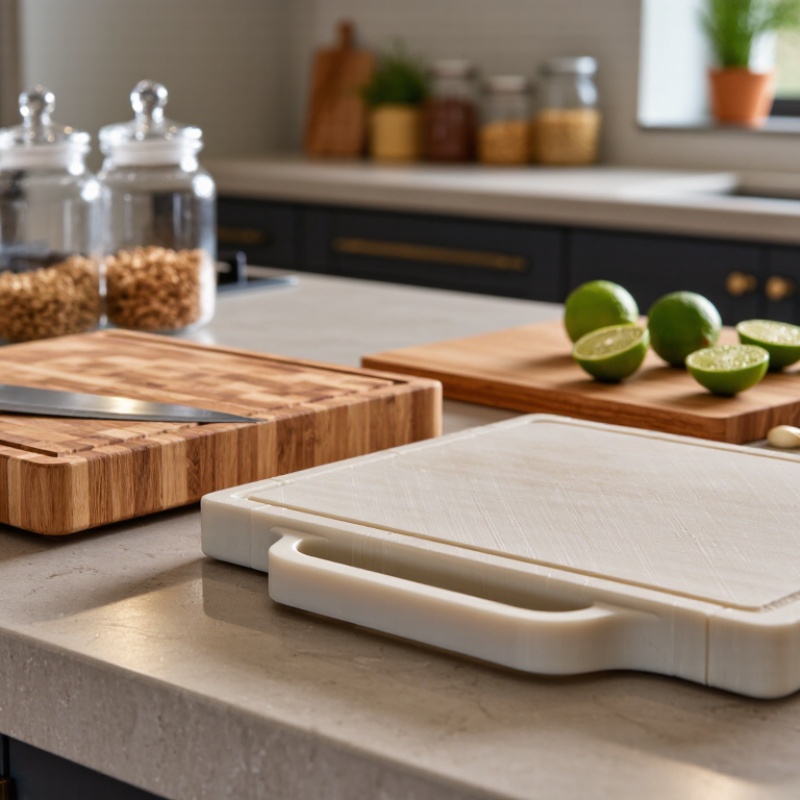
Why Are Wooden Cutting Boards Better Than Plastic? 7 Tips
Wood and plastic behave differently under a knife. The USDA Forest Products Laboratory’s Wood Handbook reports wide hardness differences among wood species, so “wood” is not one material. A dense board can resist deep cuts, while a softer board may show marks quickly. Plastic usually feels uniform, but repeated chopping creates grooves that can shelter food residue. A 2016 Journal of Food Protection study found that worn, scratched surfaces were harder to clean effectively. My own kitchen board has proved this point. The scratches collect onion skins, even after careful washing.
Knife wear is another practical concern. Hard glass, stone, or very rigid surfaces can damage an edge faster than resilient wood or softer plastic. However, published testing has not established one universal percentage for knife-edge loss. Cutting angle, pressure, and sharpening habits matter greatly. This is where my earlier assumption was incomplete.
Cleanability depends on condition, not material alone. The FDA Food Code requires food-contact surfaces to be smooth, durable, and easily cleanable. Wash either board with hot, soapy water, then dry it upright. Do not leave wood submerged. Apply food-safe mineral oil when the surface looks pale or dry. Replace plastic boards with deep grooves. Keep separate boards for raw meat and ready-to-eat foods. Scrape residue immediately. Inspect both surfaces under bright light. Wooden boards may reduce visible knife damage, but they are not self-cleaning. That distinction matters.
| Tip | Comparison Dimension | Wooden Cutting Board | Plastic Cutting Board | Practical Takeaway |
|---|---|---|---|---|
| 1 | Knife Edge Wear | Wood is generally more forgiving to a sharp knife than hard, rigid surfaces. End-grain wood can provide additional give beneath the blade. | Plastic is usually softer than glass or stone, but repeated chopping on a thin or rigid board can still contribute to faster edge dulling than a resilient wooden surface. | For frequent knife use, a quality wooden board is often the better choice for preserving edge sharpness. |
| 2 | Visible Scratches and Gouges | Wood can develop knife marks, but shallow damage may be sanded smooth and the surface can often be restored with food-safe board oil. | Plastic commonly shows cuts and grooves over time. Deep grooves are difficult to clean completely and are not practically repairable. | Replace plastic boards when deep grooves become extensive; refinish wooden boards when appropriate. |
| 3 | Surface Hygiene | Many woods absorb some moisture, and their structure can limit bacterial movement into the surface when properly cleaned and dried. This does not eliminate the need for sanitation. | Plastic is non-absorbent when intact, but knife grooves can retain food residue and microorganisms if the board is heavily worn. | Both materials can be hygienic when cleaned promptly; surface condition matters as much as material. |
| 4 | Cleaning Method | Wash with hot, soapy water, rinse, dry immediately, and avoid prolonged soaking. Most wooden boards should not be placed in a dishwasher because heat and moisture can cause warping or splitting. | Many plastic boards are dishwasher-safe, making routine sanitizing more convenient. Always follow the board’s care instructions. | Plastic is usually easier for high-temperature machine washing; wood requires more careful hand cleaning. |
| 5 | Moisture and Warping | Wood may warp, crack, or split if left wet, exposed to high heat, or washed repeatedly in a dishwasher. Regular drying and occasional oiling help maintain the surface. | Plastic is generally resistant to water and does not absorb moisture like wood, although heat can deform some plastic boards. | Choose plastic for low-maintenance moisture resistance; choose wood only if proper drying is convenient. |
| 6 | Stability and Work Comfort | Thicker wooden boards are usually heavier and more stable, which can reduce slipping and vibration during chopping. They also tend to feel quieter under the knife. | Plastic boards are often lighter and easier to move, but thin boards may slide unless they have non-slip features or are placed on a damp towel. | A thick wood board favors stability; a plastic board favors portability and easy storage. |
| 7 | Best Food-Safety Practice | Use separate boards for raw meat and ready-to-eat foods when possible. Wash after each use, dry thoroughly, and discard or refinish a board that has deep cracks or cannot be cleaned effectively. | Use separate boards for raw meat and ready-to-eat foods when possible. Replace a plastic board when deep, difficult-to-clean grooves cover the cutting area. | Correct cleaning, drying, separation of food types, and timely replacement are more important than choosing wood or plastic alone. |
Bottom line: Wooden boards are often preferred for knife comfort, stability, and repairability, while plastic boards are typically easier to sanitize in a dishwasher and more convenient for raw-food preparation. Either material can be a safe choice when it is kept clean, dry, and free from deep damage.
No. Safety depends on surface condition, cleaning, drying, and handling habits. Well-maintained wood may limit bacterial persistence, but neglected wood can become difficult to clean.
Repeated chopping creates grooves that collect food residue. Deep cuts may shelter onion skins, juices, and microorganisms. A smooth plastic surface is easier to inspect.
Usually, resilient wood is gentler than glass, stone, or very rigid materials. However, knife wear depends on cutting angle, pressure, and sharpening habits. No universal percentage exists.
Scrape residue away immediately. Wash with hot, soapy water, then rinse thoroughly. Dry the board upright, allowing air to reach both sides.
Bacterial recovery from wood can decline substantially as the surface dries. Within 24 hours, many organisms may become difficult to recover. “Not recovered” does not always mean dead.
No. Use separate boards for raw meat and ready-to-eat foods. This reduces transfer between raw juices and foods served without further cooking.
Replace plastic boards with deep grooves, persistent odors, or serious cracks. Replace wooden boards with loose fibers, dark damp areas, or damage that cleaning cannot remove.
Inspect it weekly under bright light. Run your fingers across the surface. If cuts feel deep or residue remains after washing, replacement may be wiser.
Apply food-safe mineral oil when the wood looks pale or feels dry. Oil does not disinfect the board. It only supports surface condition and moisture control.
I once assumed wood was automatically safer. That was incomplete. Wood may perform well, but careless washing, damp storage, or deep cuts can erase its advantages.
This guide explains why are wooden cutting boards better than plastic for many everyday kitchen tasks, focusing on knife wear, surface damage, hygiene, and care. Wood is generally gentler on knife edges and may be less likely to develop deep, difficult-to-clean grooves when properly maintained. Research also indicates that dry wooden surfaces can reduce bacterial survival substantially within 24 hours, although no cutting board is automatically safe without thorough cleaning and drying. Plastic boards can still be useful, especially when separated for raw foods, but visible scoring and damage should be taken seriously.
The article also connects practical care with food-safety principles: cutting surfaces should remain smooth, durable, and easily cleanable. It recommends using separate boards for raw meat and ready-to-eat foods, washing each board promptly, rinsing away residue, drying it completely, sanitizing when appropriate, and avoiding prolonged moisture. Finally, boards should be inspected regularly and replaced when cracks, deep grooves, warping, or other damage prevents effective cleaning.
