Picky Kitchen
Convection ovens move hot air around food, often browning the surface before the center finishes cooking. That makes temperature checking essential, especially with thick chicken breasts, pork roasts, and stuffed poultry. This guide explains how to use a meat thermometer in a convection oven with practical steps for placement, timing, and safe temperature decisions.
The USDA FSIS recommends 165°F for poultry, 160°F for ground meats, and 145°F for whole cuts of beef, pork, lamb, and veal, followed by a three-minute rest. These figures come from established food-safety guidance, not personal preference. The FDA Food Code 2022 also emphasizes calibrated thermometers and accurate internal measurements for temperature control. Small details matter. Insert the probe into the thickest center, avoiding bone, fat, and the roasting pan. For a whole chicken, check the breast, inner thigh, and wing area.
Convection cooking still has variables. Fan strength, pan position, oven calibration, and meat shape can change results. I have seen a roast read safe near the edge while its center remained undercooked. That mistake is easy to repeat. Use the thermometer near the expected finish time, then verify another spot before serving. Let the meat rest, because internal heat may continue rising. A quick calibration test in ice water can reveal a faulty reading, although even that test requires careful technique. This 2026 guide combines USDA and FDA recommendations with hands-on cooking practice, while acknowledging one uncomfortable truth: a timer can suggest readiness, but only a reliable temperature reading can confirm it.
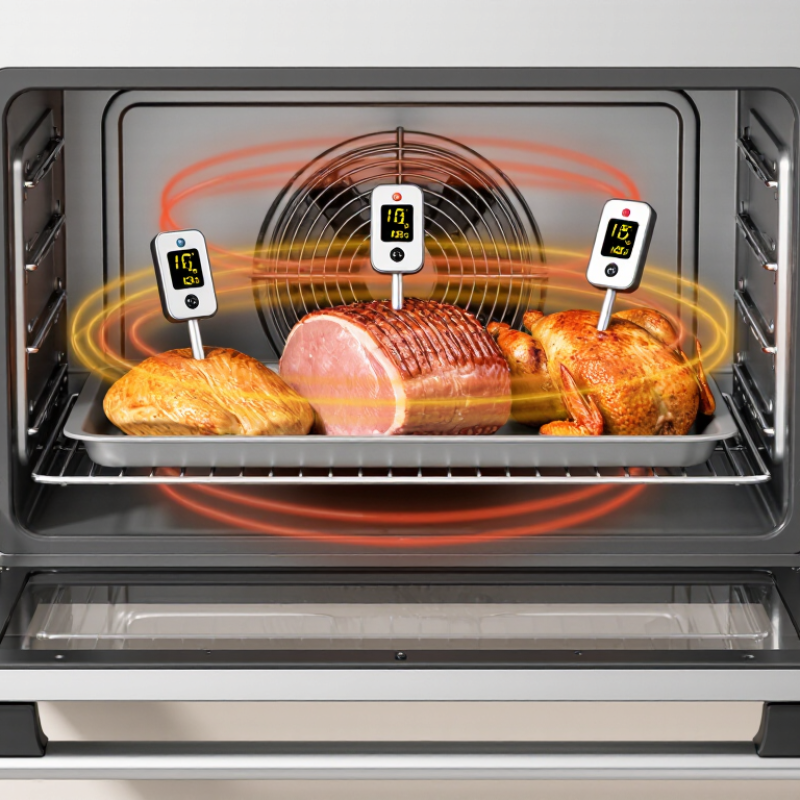
A convection oven moves hot air around the food, so roasting may finish earlier than expected. The thermometer matters more than the oven’s display. Choose an oven-safe leave-in probe for long roasts, or an instant-read model for quick checks. Look for a clear temperature scale, a thin probe, and an accuracy statement from the manufacturer. A thick probe can leave a visible hole and lose juices. I have sometimes checked too close to the pan, which gave a falsely high reading.
The United States Department of Agriculture’s Food Safety and Inspection Service states that a thermometer is the only dependable way to confirm doneness. Its guidance lists 165°F for poultry, 160°F for ground meats, and 145°F for whole cuts of beef, pork, veal, and lamb, followed by a three-minute rest. The FDA Food Code 2022 also uses these temperature controls for food safety. Insert the probe into the thickest center, avoiding bone, fat, and the pan. In convection cooking, check earlier than the recipe suggests.
Tips: Test the thermometer in ice water at 32°F. Then verify it in boiling water, adjusting for altitude. Keep the probe away from the oven wall. Wait for the number to stabilize. Trust the reading, but question your method. A small placement error can change dinner.
Accurate convection cooking begins before the meat enters the oven. Set the oven rack with space around the pan, allowing hot air to circulate evenly. Preheat fully, because a fan cannot correct an underheated oven. Check the thermometer’s condition and confirm whether it is oven-safe or designed for quick readings. Never leave an instant-read model inside the oven.
Test calibration in ice water before cooking. It should read close to 0°C or 32°F. Boiling water offers another check, although elevation changes its reading.
I sometimes skip this step when busy, and that can create false confidence. Small errors matter with thick roasts.
Prepare the meat by patting its surface dry and shaping uneven sections when possible. Insert the probe into the thickest center, avoiding bone, fat pockets, and the pan. For a large roast, check two or three locations. Convection heat may brown the surface quickly, so begin checking earlier than a conventional-oven timetable suggests. Keep the door closed between readings.
Watch the display carefully.
When the temperature approaches the recipe’s target, remove the meat and let it rest. Internal heat can continue rising during this period. Clean the probe with hot, soapy water before and after each use. A reliable result depends on preparation, placement, and a willingness to question one reading.
In a convection oven, probe placement matters more than the display itself. Moving air browns the surface quickly, while the center may remain undercooked. I place the probe in the thickest section, avoiding bone, fat, and the roasting pan.
For a whole chicken, insert the probe through the breast’s side into the deepest meat. Check the inner thigh separately, without touching the bone. For beef, pork, and lamb roasts, push the probe into the center from the side. This method prevents a shallow reading from the hotter outer layer. Thin chops require side insertion through the narrowest edge. Ground meat needs the probe pressed into its thickest area.
USDA FSIS guidance lists 165°F for poultry, 160°F for ground meats, and 145°F for whole cuts of beef, pork, lamb, and veal, followed by a three-minute rest. FDA Food Code 2022 also emphasizes calibrated thermometers and accurate internal measurements. Those numbers are useful, but placement can still create false confidence. I once checked a roast too close to the surface and removed it early. The center was noticeably cooler.
Keep the probe tip away from the metal tray. Metal can distort the reading. Wait until the number stops rising, then test a second location. Two readings are safer.
| Meat or Cut | Best Probe Position | Avoid Placing the Tip | Recommended Minimum Internal Temperature | Resting Guidance | Convection-Oven Thermometer Tip |
|---|---|---|---|---|---|
| Whole Chicken | Insert the probe into the thickest part of the inner thigh, parallel to the bone. | Do not touch the thigh bone or insert the tip into the body cavity. | 165°F / 74°C | Rest for about 10–15 minutes before carving. | Check the thigh and the thickest part of the breast. The lowest reading determines whether the chicken is ready. |
| Turkey Breast | Insert horizontally into the thickest center of the breast from the side. | Avoid the breastbone, skin, and shallow areas near the surface. | 165°F / 74°C | Rest for 15–20 minutes to help retain juices. | Convection heat can brown the surface quickly, so rely on the internal reading rather than color. |
| Chicken Breast | Place the tip in the thickest center of the breast, entering from the side if possible. | Do not probe through the thin edge or touch the rib bone. | 165°F / 74°C | Rest for 5 minutes before slicing. | Begin checking several minutes before the expected finish time because convection air can cook unevenly-sized pieces at different rates. |
| Chicken or Turkey Thigh | Insert into the thickest section without contacting the bone. | Avoid the joint, bone, and very thin outer edge. | 165°F / 74°C | Rest for 5–10 minutes. | For more tender dark meat, many cooks continue cooking beyond the safety minimum, but the thermometer should still be placed in the thickest portion. |
| Beef Roast | Insert into the center of the thickest part, aiming from the side so the tip reaches the middle. | Avoid fat pockets, the roasting pan, and contact with bone. | 145°F / 63°C | Rest for at least 3 minutes; 10–20 minutes is common for larger roasts. | Measure in more than one location when the roast is irregularly shaped. Carryover cooking may raise the temperature during resting. |
| Beef Steak | Insert the probe horizontally through the side into the thickest center. | Do not probe through the top surface into a shallow section. | 145°F / 63°C | Rest for at least 3 minutes. | For thin steaks, use an instant-read thermometer quickly from the side because the probe tip may be difficult to center. |
| Ground Beef Patties or Meatloaf | Insert into the thickest center of the patty or loaf. | Avoid gaps, cracks, and the cooking tray beneath the food. | 160°F / 71°C | Rest meatloaf for about 10 minutes; patties can rest briefly. | Check multiple patties or several points in a meatloaf because ground meat can have hot and cool areas. |
| Pork Chop | Insert horizontally into the thickest part, keeping the tip centered. | Avoid the bone and fatty edge. | 145°F / 63°C | Rest for at least 3 minutes. | Use the probe from the side for thin chops to prevent the tip from passing completely through the meat. |
| Pork Loin or Tenderloin | Insert into the thickest center along the length of the cut. | Avoid the ends, surface fat, and roasting pan. | 145°F / 63°C | Rest for 3–10 minutes, depending on size. | Check the center and the thinner end. Convection cooking may finish the narrow end sooner. |
| Lamb Roast or Chop | Insert into the thickest section, entering from the side when possible. | Do not touch the bone or place the tip in a fat pocket. | 145°F / 63°C | Rest for at least 3 minutes; larger roasts benefit from a longer rest. | For bone-in cuts, take readings in the thickest meat on both sides of the bone if necessary. |
| Fish Fillet | Insert the tip into the thickest part of the fillet, preferably from the side. | Avoid the thin tail section, skin, pan, and any bones. | 145°F / 63°C | Rest briefly, usually 2–3 minutes. | Check the thickest fillet when cooking several pieces. The thermometer should be inserted far enough to cover the sensing tip. |
| Casserole Containing Meat or Poultry | Insert into the center of the thickest portion, not just the surface. | Avoid an empty pocket, the baking dish, and areas containing only sauce. | 165°F / 74°C | Rest according to the recipe, usually 5–10 minutes. | Take readings in the center and near the edges because convection ovens can create temperature differences within a deep dish. |
How to read the table: Insert the probe into the thickest part of the food and keep the sensing tip away from bone, fat, the pan, and open spaces. The temperatures shown are minimum safe internal temperatures commonly used for food-safety guidance; always verify the reading in more than one location when the cut is large or uneven.
Monitoring Temperature During Convection Cooking
A convection oven moves hot air around the meat, so cooking often happens faster and more evenly. I place the thermometer probe in the thickest center section, avoiding bones, fat pockets, and the roasting pan. For a whole chicken, the probe should enter the deepest part of the breast and thigh without touching bone. Keep the oven door closed while monitoring. Each opening releases heat and can change the cooking time.
Temperature matters more than appearance. Poultry should reach 165°F (74°C), while ground meat generally needs 160°F (71°C). Whole cuts of beef, pork, and lamb can reach 145°F (63°C), followed by a three-minute rest. These targets reflect widely accepted food-safety guidance. The thermometer should remain steady for several seconds before reading the display. Digital readings can jump.
Check early, not late. Convection cooking may shorten the expected time, especially with smaller cuts or dark roasting pans. I usually begin checking about 10 to 15 minutes before the recipe’s suggested finish. A small error matters. Last week, I measured too close to the surface and removed the roast too soon. The center was cooler than expected. I now test two nearby spots and use the lower reading. After removing the meat, its internal temperature may continue rising during rest, but I never rely on that rise alone to correct an unsafe reading. Slice only after the temperature has stabilized.
A convection oven moves hot air quickly, so meat may brown before its center is ready. Use a clean, calibrated thermometer rather than judging color alone. Insert the probe into the thickest section, avoiding bone, fat, and the roasting pan. For thin pieces, slide the probe sideways to reach the center.
Read the temperature after the numbers stop rising. Whole cuts of beef, pork, lamb, and veal should reach 145°F, followed by a three-minute rest. Ground meats need 160°F. Poultry should reach 165°F in the thickest area. These temperatures reflect widely accepted food-safety guidance, but oven performance can vary. I sometimes check twice because one reading can be misleading.
Tips: Open the door briefly to protect oven heat. Remove the cooked meat with clean, heat-resistant gloves and sturdy tongs. Keep the thermometer probe away from raw-meat surfaces, or wash and sanitize it before reuse. Expect carryover cooking, especially with large roasts. Let the meat rest on a clean plate, not the raw cutting board. The handle may feel safe while the pan remains dangerously hot. Check it carefully.
Moving hot air can cook meat sooner than expected. The outside may brown while the center remains undercooked. Check earlier than the recipe suggests.
Use an oven-safe leave-in probe for long roasts. Choose an instant-read thermometer for quick checks. Look for a thin probe and clear temperature markings.
Insert it into the thickest center. Avoid bones, fat, and the roasting pan. For thin meat, slide the probe sideways.
Poultry should reach 165°F. Ground meat should reach 160°F. Whole beef, pork, lamb, and veal cuts should reach 145°F, then rest three minutes.
Place the probe in ice water, which should read 32°F. Test boiling water afterward. Adjust boiling-point expectations for your altitude.
Placement matters greatly. A probe near the pan may read too high. A reading against the oven wall can also mislead. I have made this mistake.
Wait until the numbers stop rising. Check the thickest area again if the result seems surprising. One reading can mislead.
Use clean, heat-resistant gloves and sturdy tongs. Move the meat to a clean plate. Do not use the raw-meat cutting board. Expect carryover cooking, especially with large roasts.
Keep the probe away from raw-meat surfaces. Wash and sanitize it before reuse. The handle may feel cool while the pan remains dangerously hot. Check carefully.
Learning how to use a meat thermometer in a convection oven helps you cook meat accurately, safely, and consistently. Begin by selecting a reliable thermometer that can withstand oven temperatures and is suitable for the type of cooking you plan to do. Before cooking, allow the meat to lose some of its chill, preheat the convection oven, and check that the thermometer is clean and functioning properly. Because convection heat circulates efficiently, cooking may be faster, so temperature monitoring is especially important.
To achieve an accurate reading, place the probe in the thickest part of the meat, avoiding bones, fat pockets, and the cooking pan. Different cuts may require slightly different probe positions, so aim for the center of the densest area. Monitor the temperature as the meat cooks, checking more frequently near the expected finishing time. Once the internal temperature reaches the appropriate doneness level, carefully remove the meat using heat-resistant tools, then let it rest before slicing. This process makes how to use a meat thermometer in a convection oven simple, practical, and dependable.
