 Picky Kitchen
Choosing the right accessories can turn a basic convection toaster oven into a practical countertop cooking station. This China Best guide explores what accessories do i need for a convection toaster oven, without encouraging unnecessary purchases. A baking pan, wire rack, air-fryer basket, oven thermometer, and heat-resistant gloves usually cover everyday needs. Fit comes first.
The details matter. A shallow tray improves airflow around vegetables. A wire rack supports toast, pizza, and small roasting dishes. An oven thermometer can reveal a surprising temperature difference between the display and the cooking chamber. Crumbs collect quickly, too. A removable crumb tray makes cleaning less frustrating. Use parchment carefully, and keep it away from heating elements.
Appliance-testing expert Sharon Franke offers a useful principle: “Fit matters more than quantity.” Her point is practical. Accessories should match the oven’s interior dimensions, cooking habits, and manufacturer guidance. A beautiful pan is still useless if it blocks circulation. I learned that after buying a tray that technically fit, but prevented the door from closing properly. Small mistake. Expensive lesson.
This introduction will compare essential, helpful, and optional accessories for convection toaster ovens. It will also consider material quality, heat resistance, storage, and cleaning effort. Some accessories look convenient but create crowded airflow. Others seem simple yet improve results every day. The goal is not a crowded kitchen drawer. It is a safer, more efficient setup for toast, roasted vegetables, baked snacks, and compact meals. Always check measurements before ordering, especially when comparing China-made accessories with different oven models.
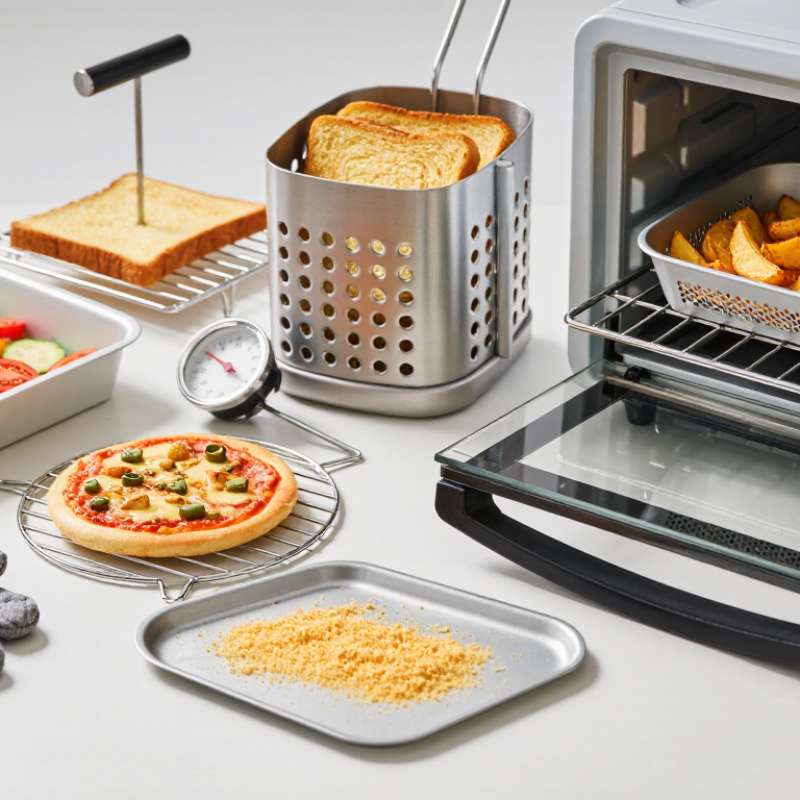
China Best: What Accessories for a Convection Toaster Oven?
Understanding each accessory makes countertop cooking safer and more consistent. A wire rack supports toast, pizza, and open-pan baking. Its raised position improves airflow around food. A shallow baking tray catches crumbs and supports cookies or vegetables. For roasted food, a perforated tray lets hot air circulate beneath the ingredients. This can reduce soggy bottoms, although results depend on food moisture and tray spacing.
A digital probe thermometer is more valuable than appearance suggests. The USDA FSIS sets 165°F as the safe internal temperature for poultry, measured at the thickest point. A heat-resistant silicone mat protects the tray surface, but it must remain clear of heating elements. Small tongs help remove hot racks without touching metal. A crumb tray also matters. I once treated it as optional, and burnt crumbs created unpleasant smoke during preheating.
The U.S. Department of Energy explains that convection cooking may allow temperatures about 25°F lower than conventional cooking. That is useful, but not universal. Dense casseroles may still need extra time. The 2024 countertop appliance market analysis from Grand View Research indicates continued demand for compact cooking equipment, increasing interest in multifunctional accessories. However, more accessories can restrict airflow. Leave space around the fan path, and avoid covering ventilation openings. Check temperature ratings carefully. Some accessories look suitable, yet warp under repeated high heat.
| Accessory | Primary Function | Best Uses | Typical Material | Recommended Position | Key Care and Safety Notes |
|---|---|---|---|---|---|
| Wire Oven Rack | Supports cookware and allows hot air to circulate around food. | Toast, bakeware, pizza, casseroles, and multi-level cooking. | Chrome-plated or stainless steel | Use the rack level specified by the recipe; the center position is generally suitable for baking. | Leave clearance from the heating elements. Use heat-resistant gloves when removing a hot rack. |
| Baking Pan | Holds food and collects drips during baking or roasting. | Cookies, pastries, vegetables, fish, and small baked dishes. | Aluminum, aluminized steel, or stainless steel | Place on the wire rack unless the oven instructions allow direct placement. | Do not cover the entire oven floor or block ventilation openings, as this can restrict airflow. |
| Broiler or Grill Tray | Allows fat and juices to drain away from food during high-heat cooking. | Steak, chicken pieces, sausages, fish fillets, and browning. | Steel or enamel-coated metal | Use on the upper or middle rack position according to the cooking instructions. | Monitor closely because broiling produces intense heat. Empty grease after the tray has cooled. |
| Crumb Tray | Catches crumbs, food particles, and small drips beneath the heating chamber. | Everyday toasting, reheating, and reducing cleanup time. | Stainless steel or coated metal | Slide into the dedicated bottom position. | Allow the oven to cool before removing. Clean regularly to reduce smoke and the risk of burnt debris. |
| Pizza Pan | Provides a flat, heat-conductive surface for cooking pizza evenly. | Frozen pizza, fresh pizza, flatbread, and small savory tarts. | Aluminum, carbon steel, or coated steel | Place on the wire rack with sufficient space for air circulation. | Check the pan diameter against the interior dimensions and keep it away from the heating elements. |
| Air-Fry Basket | Uses a perforated surface to expose food to circulating hot air for crisping. | French fries, vegetables, chicken wings, and breaded foods. | Stainless steel or coated steel mesh | Position above a baking pan to catch crumbs and oil. | Do not overload; overcrowding reduces airflow. Use only at temperatures approved for the accessory coating. |
| Rotisserie Set | Rotates suitable food so it cooks and browns more evenly. | Small whole poultry, rolled meats, and compact roasts within the oven capacity. | Stainless steel rod and metal forks | Install into the designated rotisserie supports. | Balance food securely, verify the weight limit, and keep the door closed during operation. |
| Oven-Safe Glass or Ceramic Dish | Provides a non-metal container for baking, reheating, and serving. | Lasagna, gratins, baked pasta, fruit desserts, and casseroles. | Heat-resistant glass or ceramic | Place on the wire rack with space around the dish for convection airflow. | Use only cookware marked for oven use. Avoid sudden temperature changes that may cause thermal shock. |
| Silicone Baking Mat | Provides a reusable non-stick surface for selected baking tasks. | Cookies, small pastries, and sticky foods on a compatible baking tray. | Food-grade silicone, sometimes reinforced with fiberglass | Lay flat inside a baking pan; do not place directly on heating elements. | Follow the mat's maximum temperature rating and avoid using it under broil or grill settings unless approved. |
| Heat-Resistant Oven Mitts | Protects hands and wrists when handling hot cookware and racks. | Removing pans, racks, trays, and oven-safe dishes. | Heat-resistant fabric, silicone, or a combination | Keep beside the oven in a dry, accessible location. | Inspect for holes, moisture, or worn areas. Dry mitts provide better protection than wet fabric. |
| Selection tip: Choose accessories that match the oven's internal dimensions, rack system, temperature range, and user manual. Avoid blocking the fan, heating elements, or ventilation openings. | |||||
It supports toast, pizza, and open-pan baking. Raised food receives better airflow and browns more evenly. Leave space around the food.
Use it for cookies, vegetables, crumbs, and small roasted foods. Its rim helps contain juices and loose ingredients. Do not block ventilation openings.
Holes allow hot air beneath the food. This can reduce soggy bottoms on roasted vegetables or similar foods. Results still depend on moisture and tray spacing.
A thermometer checks the center, not just the surface. Poultry should reach 165°F at its thickest point. Golden edges can mislead you.
Convection cooking may work about 25°F lower than conventional cooking. Dense casseroles may still need extra time. I sometimes trust the temperature rule too much.
Heat-resistant mitts protect your hands from hot trays. Long, non-slip tongs help lift food or small racks. Metal stays hot longer than expected.
Let racks and trays cool before washing them. Use warm water, mild detergent, and a soft brush. Avoid harsh abrasives and unsuitable dishwashers.
Empty the crumb tray before residue hardens. Dry every accessory completely before storage. I once missed narrow corners, and that small mistake caused lingering smoke.
Choosing the right accessories can make a convection toaster oven more versatile, efficient, and easier to use. If you are asking, “what accessories do i need for a convection toaster oven,” start with practical essentials such as a baking tray, wire rack, heat-resistant gloves, a small roasting pan, and suitable measuring tools. These accessories support everyday baking, roasting, reheating, and broiling while helping you handle hot cookware safely.
For improved airflow and even browning, consider perforated trays, air-frying baskets, crumb trays, and racks that fit without blocking the oven fan or heating elements. When purchasing accessories in China, check their dimensions, heat resistance, material quality, and compatibility with your oven’s interior. Avoid items with coatings or materials that may release odors or degrade at high temperatures. Regular cleaning, careful drying, and organized storage will extend accessory life and help maintain safe, hygienic cooking performance.
